Friday, 17 April 2015

I speak food in different languages.

Hey guys :)

I love food. 
And wine.
And food.

I'm still trying to figure out whether my personality or my cultural background made me a foodie. I'll probably never know. But then again what's the big deal about the reason behind that anyway? ;)

I'm Italian and Italians love food. They enjoy the whole act of this get-together with friends or family, consuming delicious and delicate dishes. The very thought of it makes my mouth watering. And let's be honest, every food tastes at least three times better when eaten in good company. And this time I don't intend the wine with company but the people. 
I almost never take pictures of my food. Quite unusual nowadays, huh? I think it's more important to eat the food, with that perfect consistence and taste at the moment it is served. Don't just think of meals as ingestion but as something independent. Take your time to eat. Be receptive for new things, at least most of the time, but more about that later.

I speak food in different languages.

I love the Italian cuisine as much as I love the (South)Tyrolean cuisine. But I also really enjoy Indian, Japanese, Spanish, etc. dishes. I may not know all the different languages and actually never will, but in terms of food my language is international. I fancy trying out new things, new recipes and new tastes. Cooking is definitely a passion of mine. Whilst reading new recipes I mostly just skim the text and almost never stick to the recipe or at least not to the measurements. I often experiment with different foods, sometimes already having a final result on my mind and sometimes trying something without even having an idea of the outcome. You always should be open to new things, textures or tastes but there are also some things that just shouldn't be changed. This reminds me of the Easter break. I was at home and my mum and me made some delicious spinach dumplings (the best I ever had). Typically you serve them with some melted, brown butter and some Parmesan cheese. And here was the problem. We didn't have any butter at home and my mum tried to convince me to eat them with olive oil instead. It actually didn't sound that bad, (and actually also didn't taste that bad, I tried some of my mums plate), Still it just sounded horrible in my ears. It's just such a classical dish, also connected with quite a few memories and being on holidays at home it just had to be the classical combination, everything else would have been wrong. This is probably one of these moments I was talking about earlier, where you don't have to be too open for new things. Same goes for all these so-called pizzas in America. I don't doubt that they are good with all that cheese overload and stuff but do me a favour and stop calling it pizza. Call it I don't know what, but something else. It may be delicious but it isn’t pizza. But that's a whole other topic.

So I had a lot of dishes on my mind that I wanted to present you, but none of them came in line for posting them here, because I haven't got exact recipes for them. Except for one: Pizza. It's not a classical thin Italian pizza but it's still an Italian recipe. The dough is a bit fluffier then you may know it from a pizzeria but it tastes really delicious and it's a good alternative to the classical pizza. And if you are feeling fancy, you could also add some Buffalo Mozzarella or just substitute the normal one with it.

So here's the recipe:

Ingredients:

Base
·      250g flour
·      1/4 litre water (lukewarm)
·      1 yeast cube
·      1 tbsp. salt
·      a few drops olive oil

Topping
·      Tomato sauce
·      Mozzarella
·      Toppings you like


1.   Crumble the yeast and add it to the water. Then mix all the ingredients together in a bowl. The dough is supposed to be sticky. If needed you can add some additional water or flour.
2.    Put a dish towel or the like over the bowl
3.    Let it rest in a warm(!!) place for at least 30 minutes
4.    Preheat the oven at about 180°C
5.    Now the dough will have risen. First put some olive oil on the oven tray then the dough. Pour a little bit more of the oil on the dough this will prevent the dough from sticking to you fingers and the tray.
6.    Spread the dough on the oven tray. This may take a few minutes, as the dough is a bit elastic. Try to avoid making holes.
7.    Add the tomato sauce and sprinkle some salt and herbs on it. Add the toppings you like. You can put the Mozzarella cheese either before or after the toppings on the pizza.
8.    Put it in the oven. It takes about 15-25 minutes depending on your oven, so keep an eye on it from times to times.

Enjoy :)


Thursday, 9 April 2015

Italy's influence on Austrian cuisine

Hi guys!

Today, I wanna talk about food. A topic everyone loves to talk about and an important topic in everyone’s everyday life.
I was wondering, isn't it insane how much influence traditional Italian food has on Austrian cuisine? You could almost think that “Spaghetti all’arrabbiata” originated here. From starters to desserts, typical Italian food is found almost everywhere. For example, the famous dish “Tiramisu”. It’s probably served in every restaurant in Austria, whether it’s a pizzeria or a traditional Austrian place (although, you probably won’t find it in Chinese restaurants, though). 

I, for myself, love everything with pasta. “Spaghetti Bolognese”, “Lasagne al forno”, tortellini, gnocchi … I could eat it all day long. So, now I want to catch this opportunity and introduce you to my favorite Italian pasta dish: Spaghetti with arugula and salmon.

What you need for four servings:


Spaghetti (as much as you want, you will probably cook too much anyway ;-)
One garlic clove
200 ml water
100g arugula
250g Crème fraiche
100g smoked salmon
200 ml water
One half of a lemon, salt and pepper


What you have to do:
It’s a very easy and fast dish, so I recommend, before even starting on the sauce, you bring water in a pot to boil for the pasta. (Expert tip: put a drop of olive oil and salt into the water – it makes the pasta especially good!)


How to make the sauce: First of all you have to brown the garlic in some olive oil (watch out that you don’t forget it!) Add the water and crème fraiche and bring it to boil. Cut the salmon into small stripes and I usually cut the arugula a bit, too, because otherwise it’s so much and harder to eat. 


Add it to the boiling water and crème fraiche and let it simmer for about five minutes. Then you season it with a little lemon juice, salt and pepper. Set aside until the pasta is done. 
Voilà!


Buon appetito! ;-)

Wednesday, 8 April 2015

Strawberry Dream

Hi,

Do you like smoothies as much as I do? If the answer is yes, then you'll love the following easy recipe. Today I want to share a strawberry smoothie recipe with you. This smoothie isn't only delicious, but also healthy. The ingredients I used are for two to three people.


Ingredients:
three cups of almond milk (750ml)
two handfuls of strawberries
three teaspoons of chia seeds

Instructions: 
- Put the ingredients into a blender and blend everything until smooth.
- If necessary, add more almond milk to get your desired consistency.
- Optionally, you can also add two tablespoons of soy yoghurt.


I hope you like the quick and easy recipe.

Bye for now,

Nicole


Sunday, 5 April 2015

Easter in Hungary

Easter is celebrated in a similar way as Christmas. Family members and relatives get together, eat lots of meat and sweets and small children get presents, this time from the Easter Bunny.

Easter Dinner

horseradish


The traditional Easter Dinner in Hungary consists of smoked ham (most people, who can afford it, prefer the home-made ham), milk loaf, hard-boiled egg and pickled horseradish.


This year we also made French salad which contains different kind of vegetables like chopped potato, pea, carrot, corn and onion, ham, mayonnaise, sour cream and gelatin.  


Church

Religious people go to the church for midnight resurrection ceremonies on Holy Saturday or on Sunday morning at 10 a.m. In several places chocolate bunnies will be hidden in the garden of the church which small children have to find and can eat.

Easter Monday

On Easter Monday boys and men go from door to door, say a short poem and sprinkle girls and women with perfume or with a bucket of cold water so they will not ’wither’ (like flowers). In return girls and women give them presents like painted eggs, chocolate and/or money or invite them to drink a shot of schnapps and eat a slice of ham with milk loaf and eggs.


.


Saturday, 4 April 2015

A truly moreish chocolate cake

If you have a sweet tooth, I would recommend a truly moreish chocolate cake, according to my mom’s godmother’s treasured recipe. If you became interested, follow the instructions below.

Day 1

Sponge cake

You need a round 28 cm cake tin. This cake can serve up to 16 (or even 24) people.
Ingredients: 10 eggs, 200g sugar, 180g flour, 20g cocoa, 1 sachet of baking powder

Method:

Step1: Wash the eggs, crack and separate them into whites and yolks. Start whipping the egg whites with an electric hand whisk. Just before (!) it seems to be done, add the sugar and continue whipping it until you get relatively hard white foam.

Step2: Preheat the oven to 170 degrees °C.

Step3: Measure the cocoa and the flour and mix them with the baking powder. I would recommend sifting them before doing so.

Step4: Line the cake tin with baking paper.


Step5: Add the yolks and the cocoa-flour-baking powder-mixture to the white foam you made in Step1. Stir them slowly and loosely with a whisk.  


Step6: Pour the mixture into the cake tin, but make sure you start baking it immediately, otherwise the baking paper get soaked. Cover the top with baking paper – which you will remove after 20 minutes.


Step7: Place the mixture in the oven for 45 minutes. Give the cake tin a 180-degree-turn after 20 minutes and continue baking the cake for further 25 minutes. Although, I would keep an eye on it. 


Chocolate cream

Ingredients: 2 dl whipping cream, 200g sugar, 250g (+200g) margarine, 30g cocoa, 50g dark chocolate, 1 sachet of vanilla sugar


Step1: Bring the whipping cream and the sugar to a boil. After a few minutes you will get a sticky, light mixture. Reduce the heat and add the cocoa, chocolate and vanilla sugar to it. Stir it quickly, otherwise it will catch on the bottom of the pan.

Step2: Slice the margarine and add to the mixture you made in Step1. Again, stir it quickly. Remove it from the heat, if the margarine melted.


Step3: Put the mixture into cold water and continue stirring it until it cools down. Then put the cream in the fridge.


Day 2


Step1: Make soft cream of 200g margarine with an electric whisk and then mix it with the chocolate cream you made the day before. Flavor it with rum or rum flavoring and tiny cherry pieces or raisin.


Step2: Cut the cake into two equal parts. Then fill and cover it with the chocolate cream. Then decorate it with cherry, melted chocolate or whatever. 


                                            Aaaand…voilà! My very first chocolate cake! :)


Friday, 3 April 2015

South Austrian history: The war between Styria and Carinthia


The war
between
Styria and Carinthia

A true story,
for it's true that someone once told it


It happened once in a past century. The prices for pumpkin seed oil reached a peak, and the sexy waitresses in white blouses and black minis served the hot chocolate cold.  It was only a question of time when the cultural differences would turn into a concoction of desperation and the thrill to kill. The border between the most southern Bundesländer of Austria was about to transfigure into a scenario of ice-cold vengeance,.. a battle field only for heros of unimaginable subtlety and skill.

There where thousands of chaotic battles that ended in slaughter, death, and even minor injuries. There  where wins and losses on both sides, especially on the left, but it appeared there wouldn't be an end for any of those pals fighting for their ... well,.. whatever they were fighting for. But astonishingly sudden, the major commander of Styria came up with an idea. He turned to his wise fellows and uttered words like "Guys, I have a plan." He had a plan and therefore continued: "As we all know, the Carinthian families always name their sons Koarl, right?" He was right and people acknowledged: "He's right." He went into further detail and explained: "Now, that we know that every Carinthian son is named Koarl, all we have to do is call their names on the battle field, for we know they'll be Carinthian enough to get up, willing to answer, as their innermost habits begs them to do." He concluded, "Before we try to shoot the enemy, speak out loud their names! So our targets will rapidly raise from the earth where they hide, and they'll appear like puppets in front of our barrels." Differently prepared, the fought at the next battle

S e p p  1  (shouting): Koarl!
K o a r l  1 (stands up and answers): Yes?
Sepp looks up and shoots at Koarl 1. Koarl 1, hit by the bullet, falls down.
S e p p  1  (shouting): Koarl!
K o a r l  2 (stands up and answers): Yes?
Sepp looks up and shoots at Koarl 2. Koarl 2, hit by the bullet, falls down.
S e p p  1  (shouting): Koarl!
K o a r l  3 (stands up and answers): Yes?
Sepp looks up and shoots at Koarl 3. Koarl 3, hit by the bullet, falls down.


[..]


This neck-breaking idea lead to a devastating loss on the Carinthian side. But the major authorities of Carinthia came up with a contra plan for battles to follow. One of them discerned: "Guys, I have a plan." He had a plan and therefore continued: "As we all know, the Styrian tribes always name their sons Sepp, right?" He was right and the crowd approved of his words: "He's right." He developed his argument and expressed: "Now, that we know that every Styrian son is named Sepp, all we need to do is call their names on the battle field, for we know they'll be Styrian enough to get up, willing to answer, as their uttermost habits urges them to do." He ended, "Before we try to shoot the foe, speak out loud their names! So our targets will fast rise from the trenches (and bunkers they conceal), and they'll appear like puppets in front of our barrels." And so it came to the next battle:

S e p p  1  (shouting): Koarl!
K o a r l  1 (stands up and answers): Yes?
Sepp looks up and shoots at Koarl 1. Koarl 1, hit by the bullet, falls down.
K o a r l  2  (shouting): Sepp!
S e p p  1 (answering): Koarl, is it you?
K o a r l  2 (stands up and answers): Yes!
[..]


That's how Styria won the war against Carinthia.

Yours,
Michael Koller
Eggenbergergürtel 38


This war is still in the heads of many old souls who couldn't forget the rape, the torture, and the streets coward in blood. In lie, even the war continued in the heads of too many. I never thought it would turn into a problem for me—since I deemed my verbal heat useful in battle: My divergent tongue is German-English, my honest middle-tongue is Spanish, and my short tongue is French ('though all I can express with this one is Bonjour, Zǔt, and D'accord). My sister even tops it with German-Latin being her divergent. However, it doesn't count due to the fact that our occupations are merely iconic. We represent shields rather than weapons, which by the way can be quite hurtful.

Wednesday, 1 April 2015

Tips for Urban Gardeners


So you love eating vegetables, fruits and berries but you don’t own a garden in which you could plant them? Yet you still want to know where your food comes from?

http://media.tumblr.com/tumblr_lqgzi9z8QB1qkzq2g.gif
                                                                           Source: http://media.tumblr.com/tumblr_lqgzi9z8QB1qkzq2g.gif


In this case, urban gardening is the answer to your problems! Grow and raise your own food with your friends, in a community, or by yourself. You can just sow seeds in containers on your rooftop, your balcony, in a little lot, or in community gardens. (I know for a fact, that there are several community gardening spots in Graz - here’s an example http://gardenlab-graz.over-blog.com/). 

https://earthhappy.files.wordpress.com/2010/09/seedlings-wallpaper.png

 Here are some tips for those of you who want to become urban gardeners:

1. The size of the container is important! If you want to plant e.g. carrots, you should use a container that is deep enough for their roots to fully form.
2. Use fresh potting soil. That way you don’t have to worry about any weeds and diseases.
3. You should sow the seeds twice as deep as they are wide.
4. Water the soil before you actually start planting the seeds. The seeds should be kept moist through the time it takes to germinate.
5. Leave some space around each seedling because they need enough space to grow!
6. If you want to plant cucumbers, tomatoes, sweet pepper, or melons, you should start sowing them now indoors!
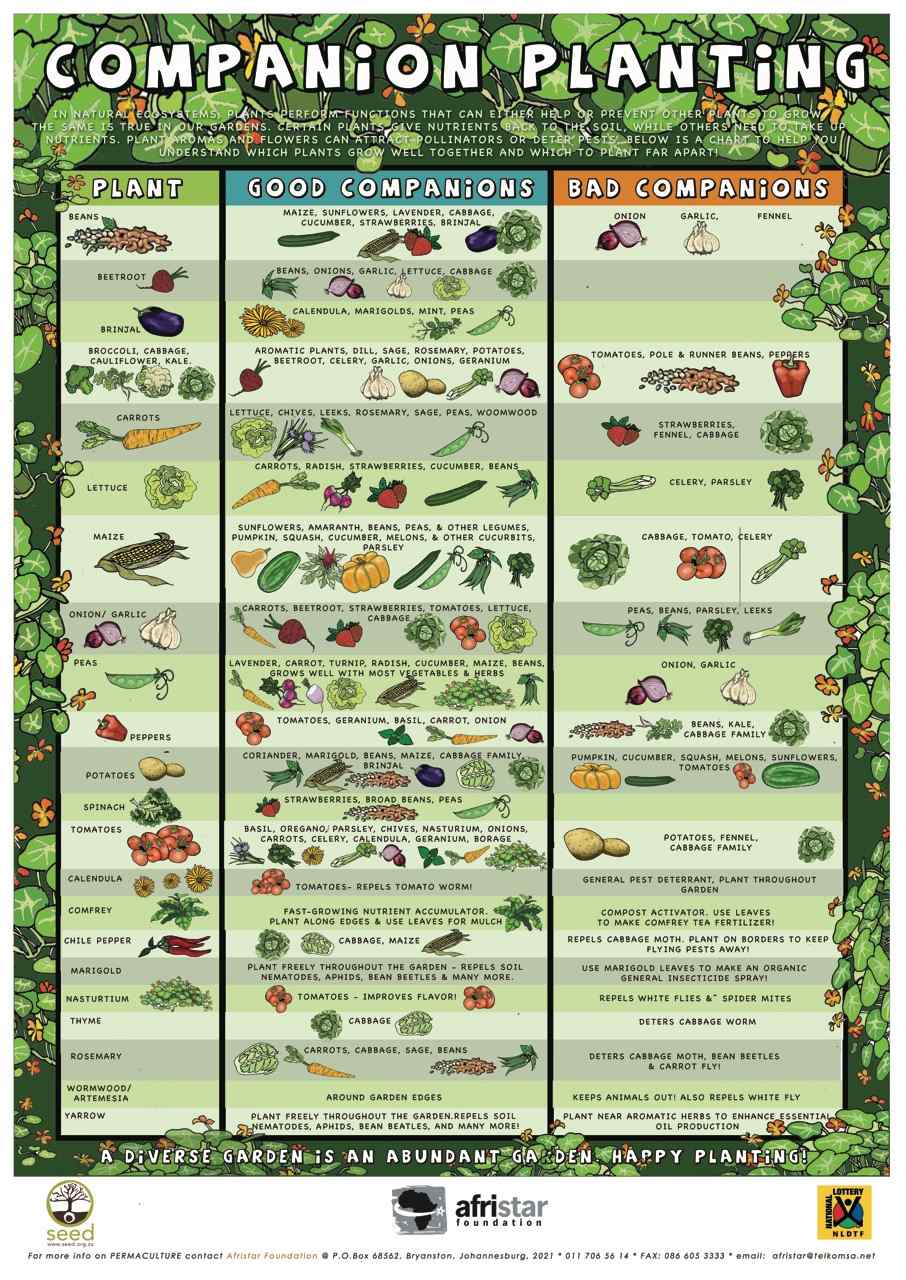
7. Keep in mind that not all plants grow well together. Use this chart – it shows you which plants are good/bad companions:


Here’s a picture of what my balcony looked like last year – it might seem chaotic, but it was real fun planting all of those vegetables, fruits and flowers! I hope that I was able to encourage you to plant your own flowers and vegetables!